

Is the Japan Rail Pass still worth it? (2026)
Short answer: for a first trip doing the classic Tokyo–Kyoto–Osaka route — a week to two weeks for most people (here's how to split it) — the nationwide Japan Rail Pass is no longer worth it. Add up the single tickets for that whole trip and the total comes to only about half the price of the pass. It pays off only when you cover long distances fast — Hiroshima, Kyūshū, the far north — and even then, do the sums first.
That used to be a harder call. The 2023 price jump settled it for most people, and there's another rise coming.
The price now — and it goes up on 1 October 2026
The nationwide pass, ordinary class:
- 7 days — ¥50,000 (~US$330)
- 14 days — ¥80,000 (~US$530)
- 21 days — ¥100,000 (~US$670)
Green-car (first class) starts at ¥70,000 (~US$470) for 7 days. Then from 1 October 2026 every price rises: the 7-day goes to ¥53,000 (~US$350), the 14-day to ¥84,000 (~US$560), the 21-day to ¥105,000 (~US$700), and 7-day green to ¥74,000 (~US$490).
The catch worth knowing: that rise is only for the overseas travel agents. JR's own online booking service — the official japanrailpass.net — is holding the current price for now (with no end date announced yet). So if the pass does work for your trip, buying before 1 October — or through the official site — pays the old rate.
The math most people actually need
Here's the trip most first-timers take: Tokyo down to Kyoto, over to Osaka, then back to Tokyo to fly home — three train legs. Add up the single tickets and the total is roughly ¥28,000 (~US$190): Tokyo→Kyoto on the Tōkaidō Shinkansen (東海道新幹線) is ¥13,320 (~US$89), Kyoto→Osaka is ¥580 (~US$4) on the JR Special Rapid (新快速), and Osaka→Tokyo on the shinkansen is ¥13,870 (~US$92).
A 7-day pass is ¥50,000 (~US$330). So you'd pay that ¥50,000 (~US$330) to replace about ¥28,000 (~US$190) of single tickets — a clear loss on this route. Buying the tickets also frees you from the pass's rules: take the fastest trains, and there's no 7-day clock to race.
Reserved or unreserved? Those shinkansen fares are for an unreserved seat, and off-peak that's usually all you need. The unreserved cars are the same train at the same time; outside the busy periods you'll almost always get a seat — and usually together — so a family or a group can ride unreserved and simply save the reservation fee. Pay the little extra for a reserved seat (a Green-car seat more again) when you want a specific seat guaranteed together, or in the peak weeks — Golden Week (late Apr–early May), Obon (mid-Aug) and the New Year holiday — the unreserved cars can fill up, so you might wait for a seat or stand for part of the ride. (Unreserved doesn't mean no seat — the unreserved cars are yours, you just take any free one rather than a guaranteed spot.)
To break even on the 7-day pass you'd need something like Tokyo to Hiroshima and back, or three long bullet-train hops squeezed into one week. That's a real itinerary for some people — it's just not the usual one.
When it IS worth it
The pass still wins in three cases:
- Long distance, fast, in one window. Tokyo → Hiroshima → back, plus a couple more hops — the far-flung trip where the distance piles up.
- You value not thinking about tickets more than the money, and you'll ride enough to get close to even.
- A regional pass fits better. This is the bit people miss. If you're only in one area — say Kansai (Kyoto–Osaka–Nara–Himeji) or the wider Tokyo region — a regional JR pass costs far less than the nationwide one and often beats single tickets. Match the pass to the map, not the whole country.
Nozomi vs Hikari vs Kodama — the three bullet trains
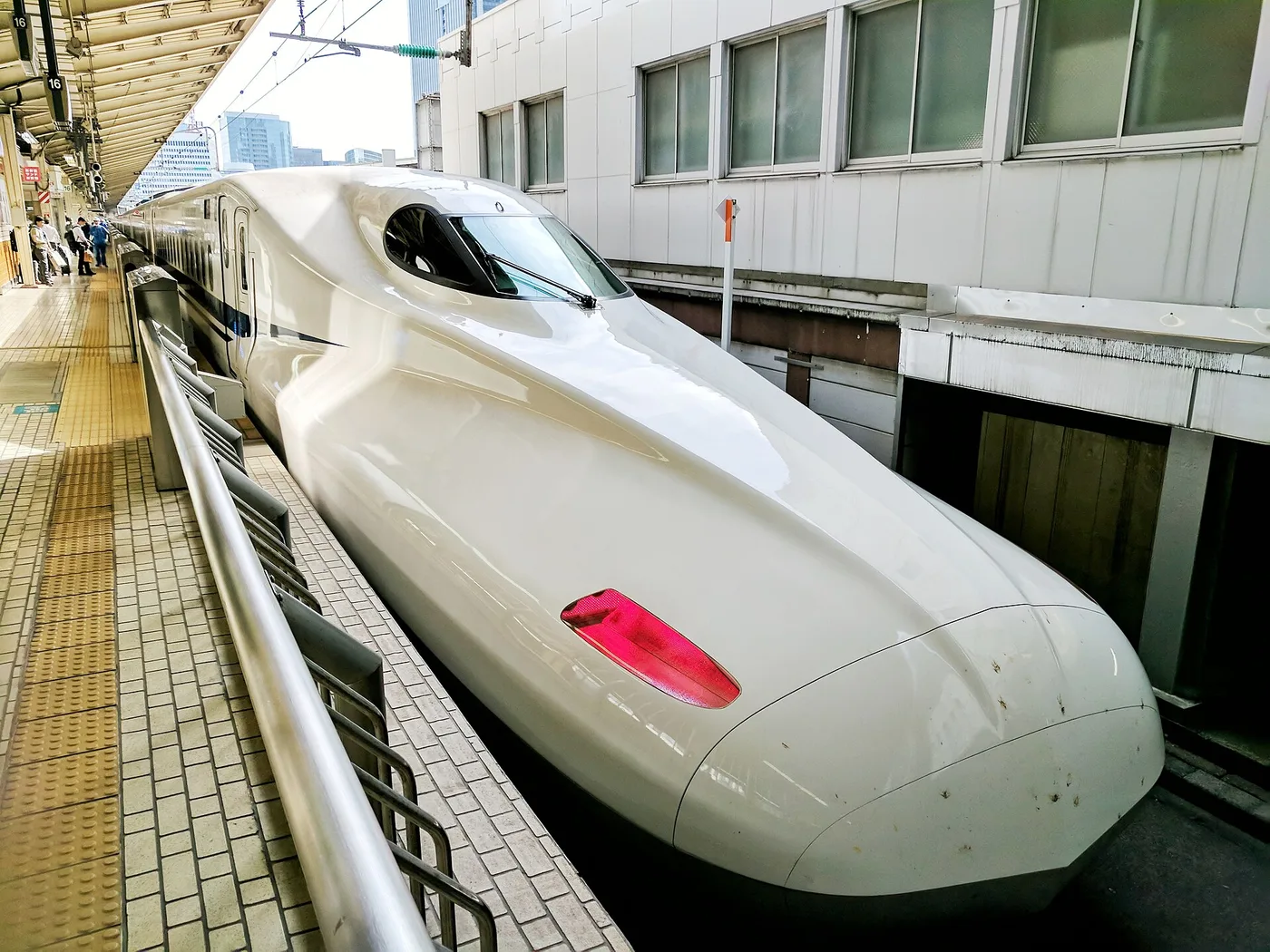
The Tōkaidō Shinkansen (東海道新幹線) links Tokyo, Kyoto and Osaka, and runs three train types on the same line:
- Nozomi — fastest, fewest stops. Tokyo→Kyoto in about 2h20. The default if you're buying single tickets.
- Hikari — a few more stops, about 20 minutes slower (~2h40) — and the fastest train the Japan Rail Pass includes.
- Kodama — stops at every station, ~3h40. Fine for a short hop, too slow for the long ones.
Here's the pass wrinkle: it used to ban the fastest trains — the Nozomi, and the Mizuho (its equivalent on the Kyūshū line). That changed — pass holders can now ride them for a supplement — but in practice, skip the supplement. The Hikari covers the same Tokyo–Kyoto–Osaka route only about twenty minutes slower and is already included, so paying extra for the Nozomi rarely earns its cost. Buying single tickets, there's no such limit: just take the Nozomi. (New to the bullet train? Here's how to ride it — booking, seats, and which window sees Mt Fuji.)
The mistake to avoid — and the shortcut
The mistake is buying the pass first, then building a trip to justify it. Do it the other way round: settle the route, then price the pass against it. A pass that's brilliant for a Hiroshima-and-Kyushu loop is dead money for a Golden-Route week.
Working that out by hand is an evening of fare tables and train-times. Or don't: tell us your cities and dates and let the planner build the route. Every leg shows its real travel time and a running cost, so you see at a glance whether a pass beats single tickets. It's a solid first cut you can run with, in about a minute, without the homework.
Decide the trip. The ticket answer falls out of it.
A full day-by-day plan in about a minute — free, no account.
✨ Plan my trip