

How to ride the shinkansen: tickets, seats, and the Fuji seat
Short answer: the shinkansen is the easy part of Japan. Book a seat on the smartEX app in five minutes (it takes a foreign card and runs in English), link it to your IC card, and you tap straight through the gates — no paper ticket. Or just turn up and buy a ticket on the spot — an unreserved seat to board any open car, or a reserved seat if you'd rather lock one in (you can still reserve right up to departure, space permitting). Below: the trains, the seats, the one big-suitcase rule that catches people out, and which seat sees Mt Fuji.
Booking: smartEX is the easy way
You don't need a ticket office. The smartEX app (free, English, takes an overseas credit card) books any seat on the Tōkaidō Shinkansen (東海道新幹線) — the Tokyo–Kyoto–Osaka line — and the Sanyō line on to Hiroshima and Hakata.
The neat part: once you've booked, you register your IC card in the app (type in the 17-digit number off the back of your Suica, Pasmo or ICOCA — here's the IC-card explainer), and then you just tap that card at the shinkansen gate and walk to your seat. No collecting a paper ticket, no machine queue.
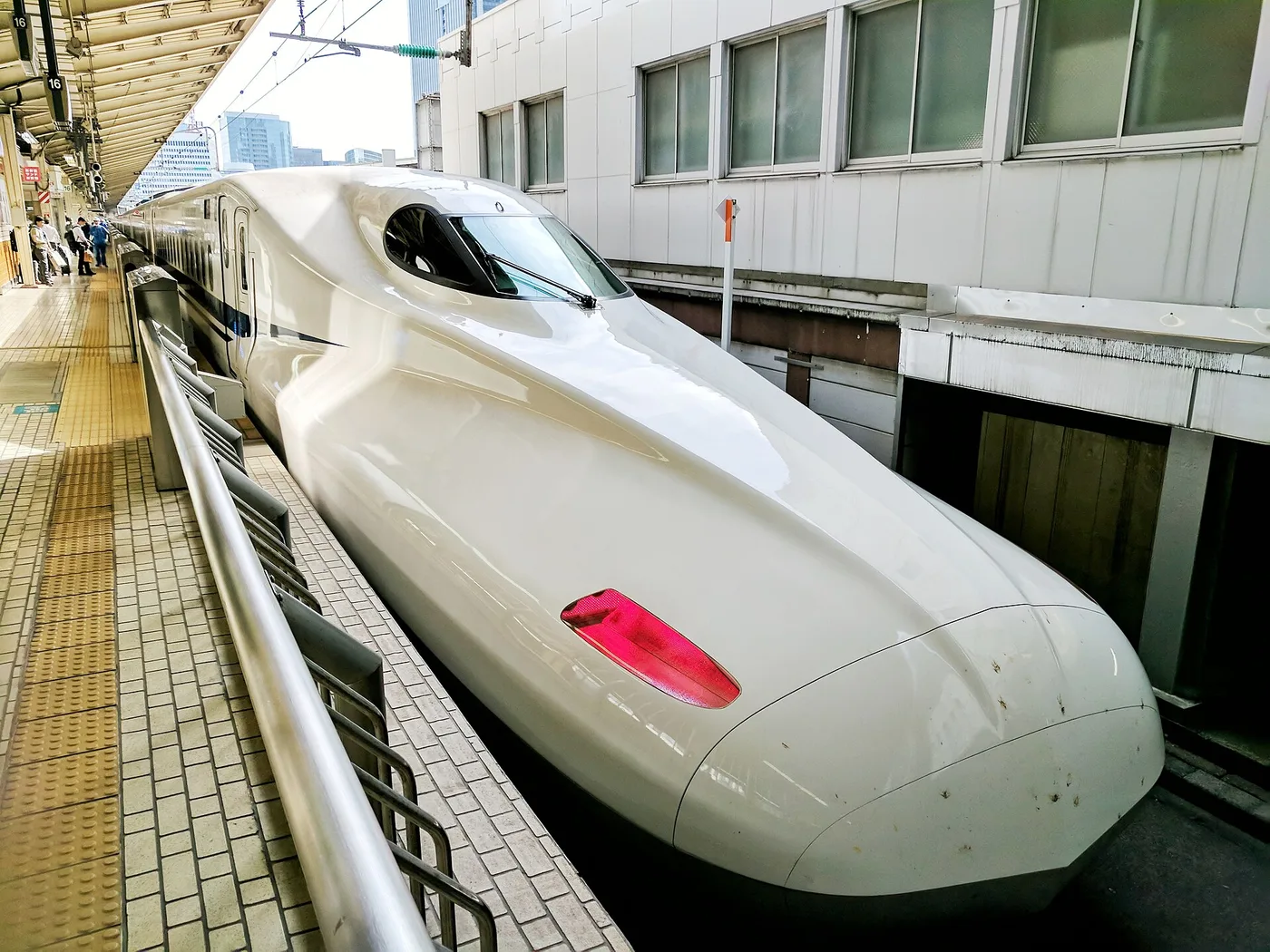
The one gotcha at big stations: the shinkansen has its own gates, separate from the local subway and JR lines. At a hub like Shin-Osaka (新大阪) or Tokyo you usually tap out of the local system first, walk over to the shinkansen entrance, and tap in again there — you don't glide through on a single tap the way you do between local lines. Follow the blue Shinkansen (新幹線) signs, not the ordinary exit.
Nozomi vs Hikari vs Kodama — the three trains
The same line runs three train types, fastest to slowest:
- Nozomi — fastest, fewest stops. Tokyo→Shin-Osaka in about 2h30, Tokyo→Kyoto about 2h20. The default.
- Hikari — a few more stops, about 20 minutes slower. The fastest train the Japan Rail Pass includes (the pass bans the Nozomi unless you pay a supplement — is the pass even worth it?).
- Kodama — stops at every station; much slower. Fine for a short hop, not for the long haul.
Buying single tickets, just take the Nozomi.
Reserved, unreserved, or Green?
Three ways to sit, cheapest first:
- Unreserved (自由席) — turn up, board any unreserved car, sit where you like. Tokyo→Shin-Osaka is ¥13,870 (~US$92). Off-peak you'll almost always get a seat, so it's the cheap, flexible default — chance it and you'll be fine. The catch is the peak weeks — Golden Week (late Apr–early May), Obon (mid-Aug) and New Year — when unreserved cars fill and you'll stand the whole way. Risk it off-peak; reserve at peak, and don't say we didn't warn you.
- Reserved (指定席) — a guaranteed specific seat, about ¥14,720 (~US$98) on that route. You can book it weeks ahead or grab one the same day, right up to departure — it only sells out at the peak weeks above. Worth it in peak season, or any time you want a particular seat (see Fuji, below) or to sit together as a group.
- Green car (グリーン車) — first class: 2+2 seats instead of 2+3, more legroom, quieter, about ¥19,590 (~US$130). A treat, not a necessity.
The Fuji seat
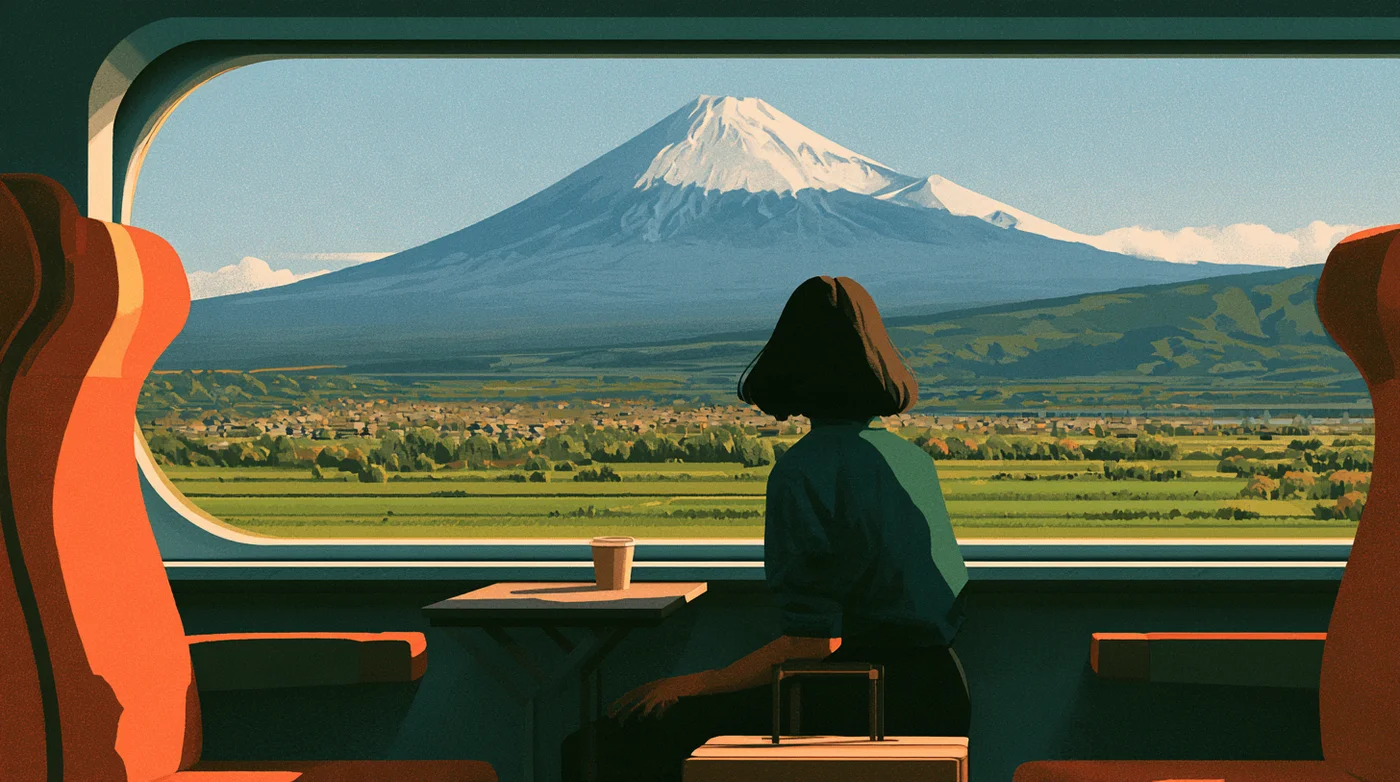
Mt Fuji is visible from the Tōkaidō Shinkansen for a few minutes, on one side only, about 40–45 minutes out of Tokyo (between Shin-Fuji and Shizuoka). To catch it:
- Tokyo → Osaka/Kyoto: sit on the right — that's seat E in an ordinary car (or seat D in the Green car).
- Osaka/Kyoto → Tokyo: sit on the left — seat A.
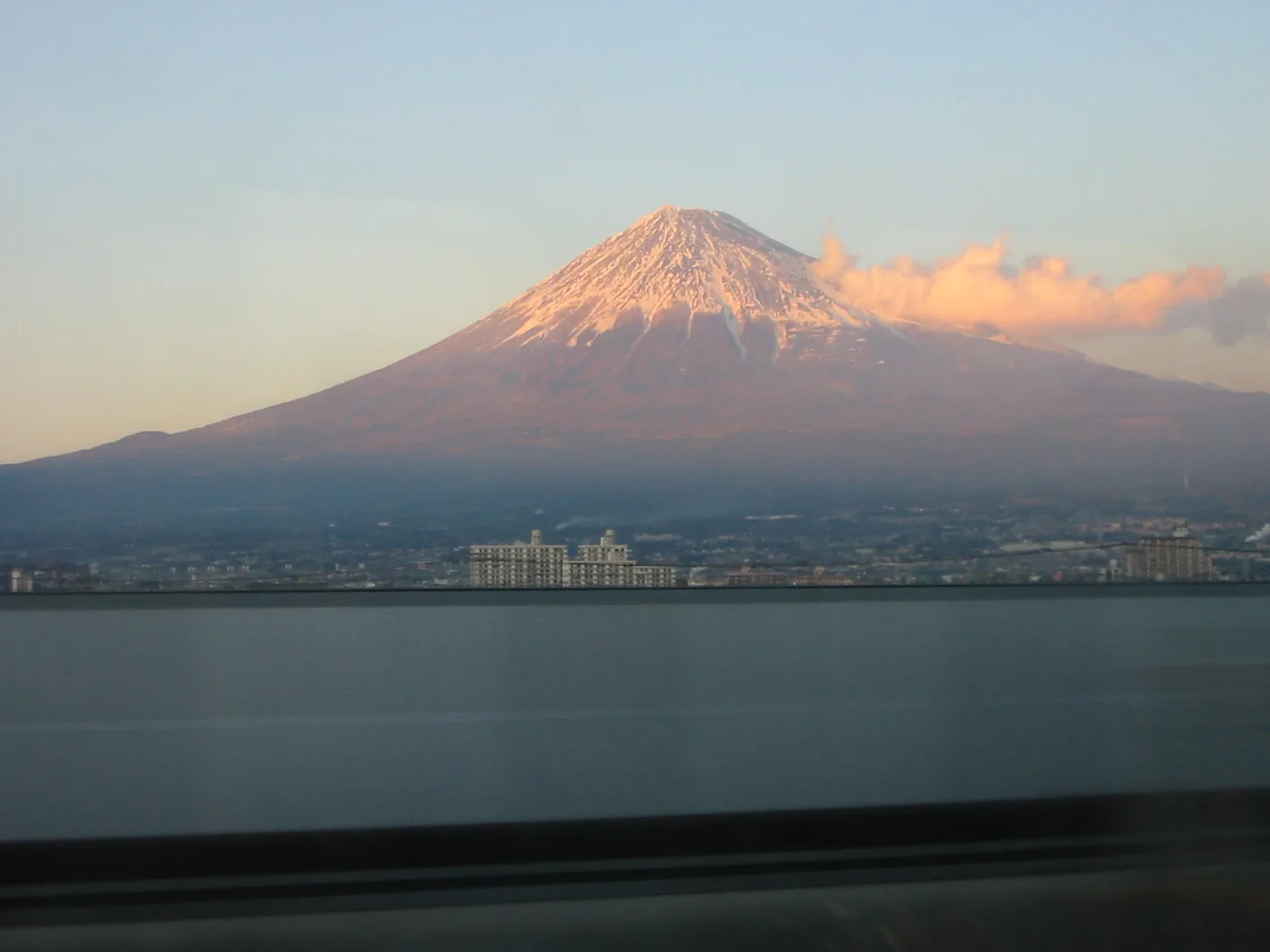
Reserve that seat if Fuji matters to you, pick a clear day, and keep your camera ready for the window. It's cloud-covered as often as not, so treat a sighting as a bonus, not a plan.
Big suitcase? Reserve the baggage seat
The rule that catches people out: on the Tōkaidō, Sanyō and Kyūshū lines, a bag whose three dimensions add up to 160–250 cm (roughly a large check-in suitcase, 30-inch and up) needs a free reservation of a "seat with an oversized-baggage space." It costs nothing — but if you bring an oversized bag without one, there's a ¥1,000 (~US$7) fee and the conductor can move your bag. Book it when you reserve your seat on smartEX; under 160 cm, don't worry about it.
There are two kinds of oversized spot, and both are that same free reservation. The usual one is the space behind the last row of the car — reserve a last-row seat and the bag sits right behind you. The newer one, on N700S trains, is a lockable luggage compartment on the deck between the cars. You stow the bag, set a passcode lock, and leave it — the one to pick with a valuable case. It's a separate thing from the last-row space, and JR is trialling letting you use the deck compartment without a reservation, though you should still book to be sure. Take whichever the app offers.
A few first-time notes
- Trains leave on the dot — and arrive only a few minutes before. The board shows your train, car number and platform; line up at your car's floor mark early, because the boarding window is short. If you're a minute late, you've missed it — but the next one is usually 10–15 minutes behind.
- Eating on board is normal. Grab an ekiben (a station bento) and a drink before you board — it's part of the ride. Forgot? Some platforms have a kiosk or konbini right by the tracks if you're lucky — but the old trolley service is gone on the fast trains, so buy before you're aboard.
- Big bags go in the space behind the last row of each car, or the reserved oversized area; small cases fit the overhead rack.
Don't overthink the trains — plan the days
Booking a shinkansen is five minutes. The part worth thinking about is what the trip does around it — which cities, how many days, which day the long hop falls on. Tell us your cities and dates and we'll build the route on the real trains, each leg with its travel time and a running cost that already folds in every shinkansen ticket you'd buy, so the whole trip drops out in about a minute. Then all that's left is to tap through the gate.
A full day-by-day plan in about a minute — free, no account.
✨ Plan my trip