

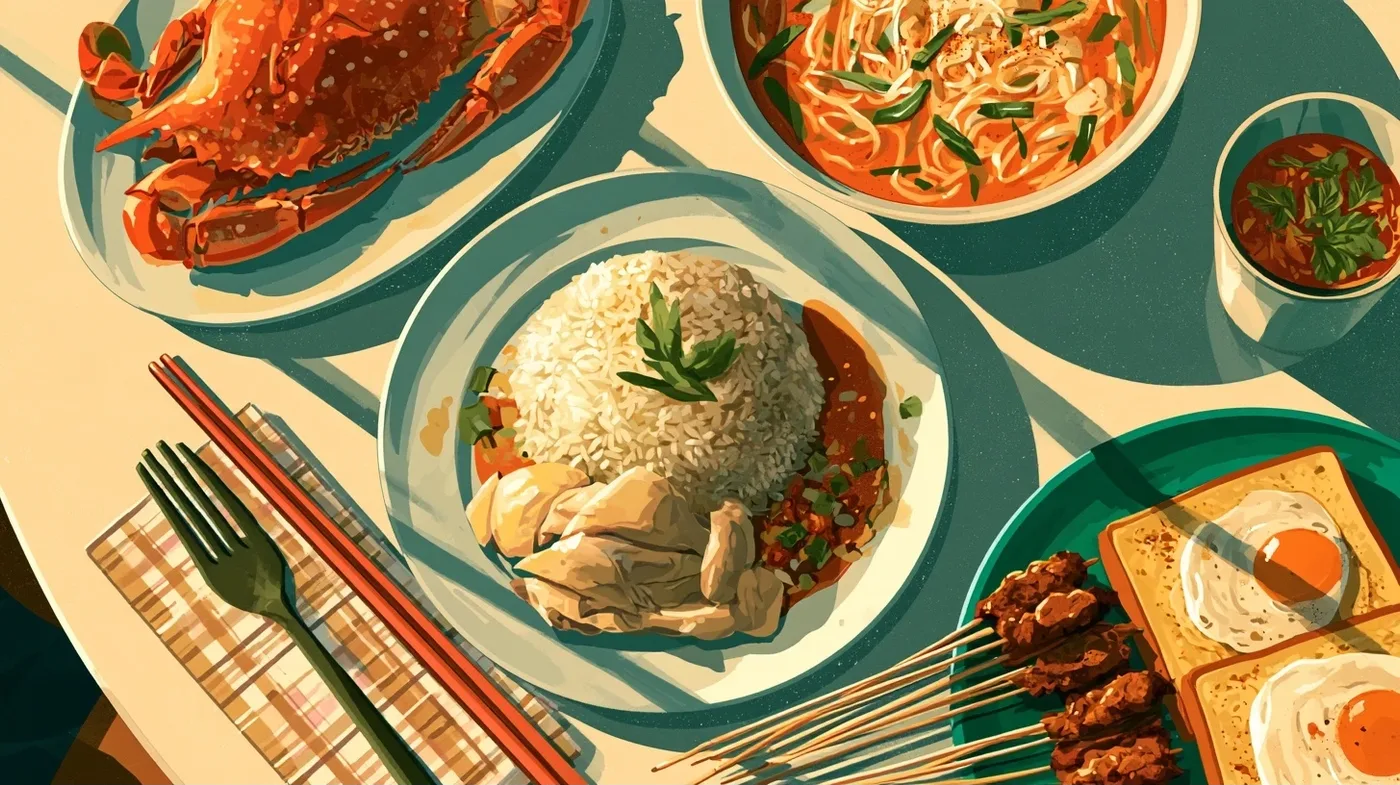
Singapore hawker food: what to eat, and where
Short answer: eat at the hawker centres, and eat across all three cuisines. Singapore turned open-air food courts into a UNESCO-listed culture — hundreds of specialist stalls under one roof, each doing a single dish for decades, some with a Michelin star over a plastic stool. It's Chinese, Malay, Indian and Peranakan cooking side by side, it's world-class, and a plate is S$3–6 (~US$2.20–4.40). Come hungry, order widely, and don't sit yourself into one cuisine.
Start here: chicken rice
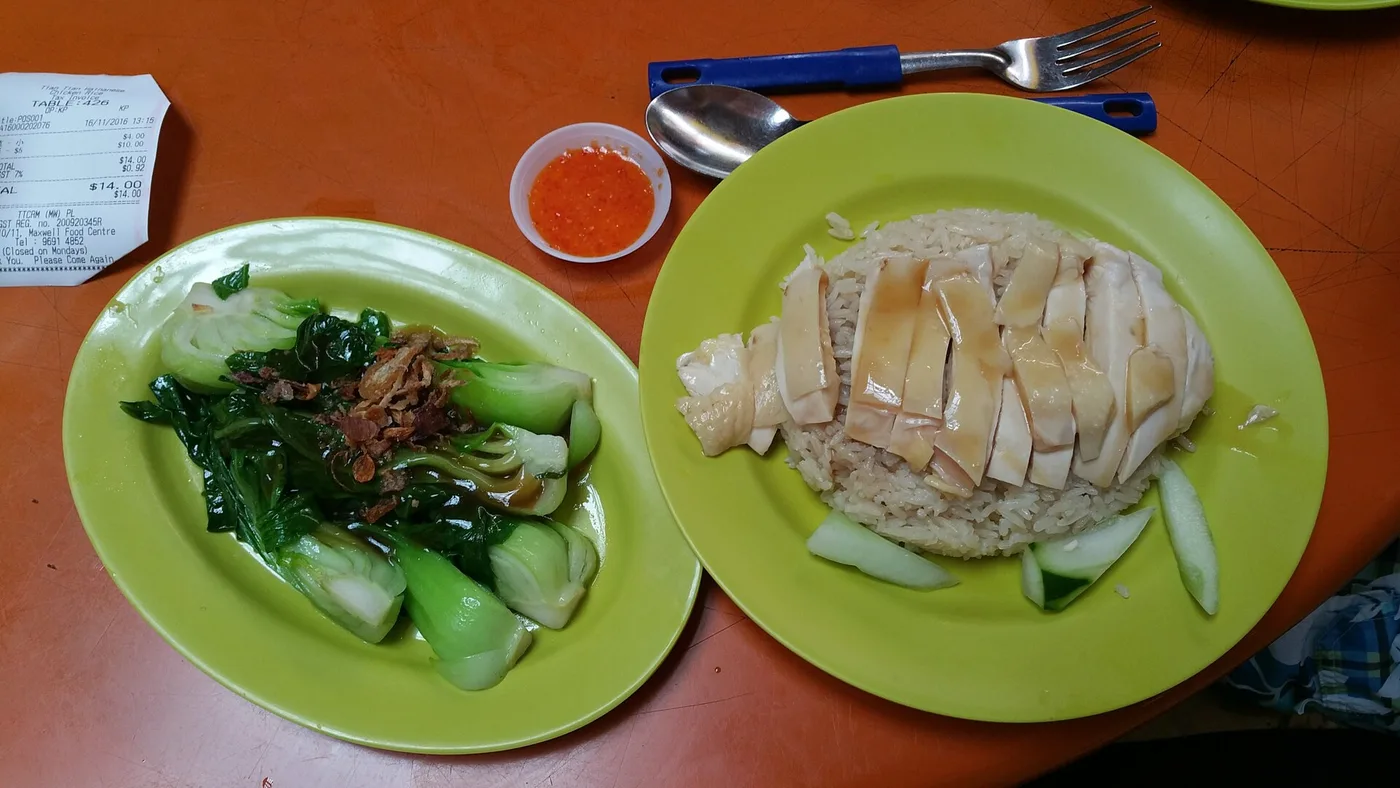
The national dish, and the one to eat first. Poached Hainanese chicken with rice cooked in the stock, chilli and ginger on the side — simple, and endlessly argued over. at Maxwell is the famous one — go early, it sells out; earned a Michelin star for its soya-sauce chicken rice and still charges hawker prices.
The icons to order
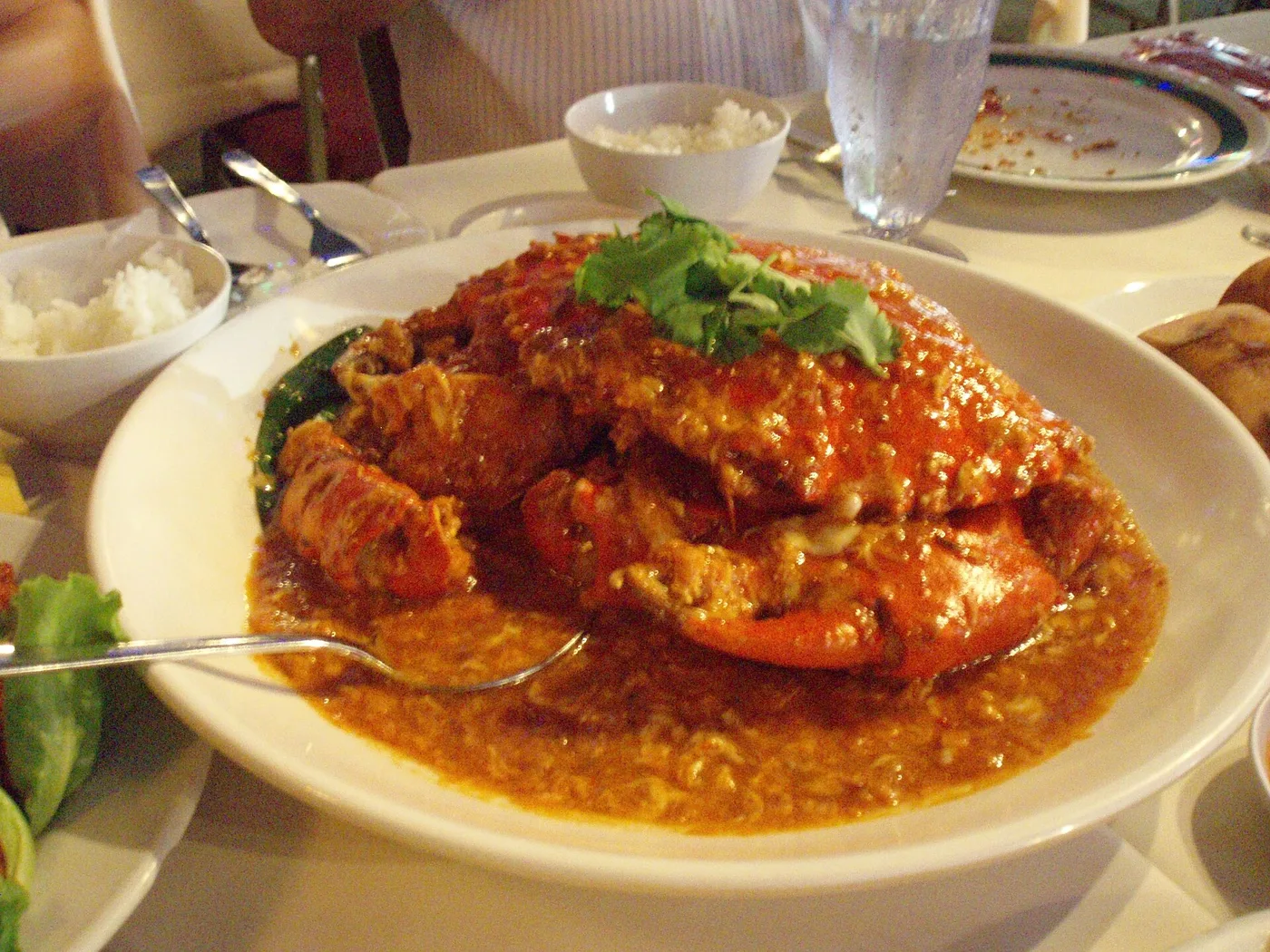
- Chilli crab — the sweet-savoury national showpiece, a whole crab in a chilli-tomato-egg gravy you mop up with fried buns. A sit-down splurge: and are the names.
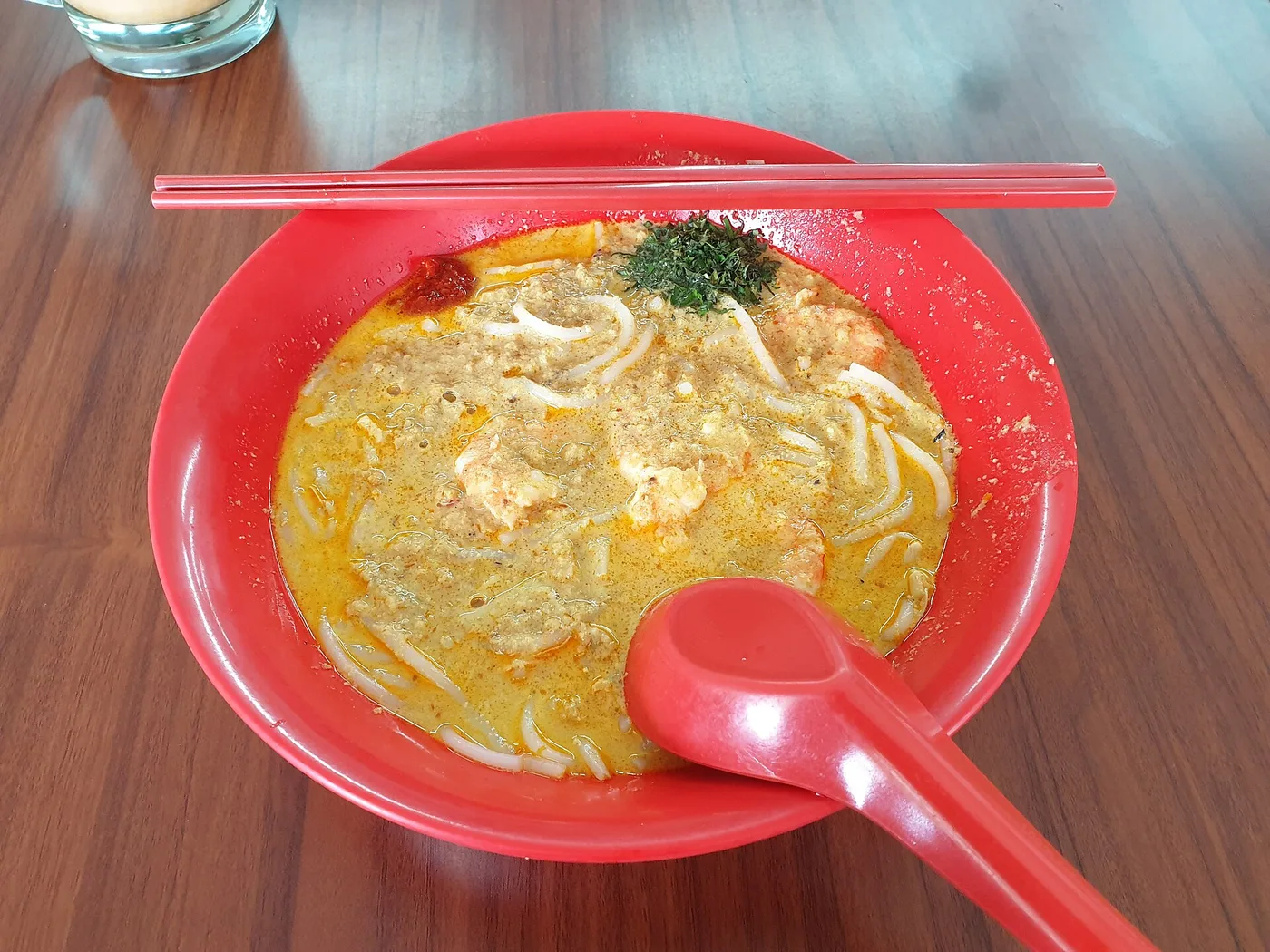
- Laksa — a coconut-curry noodle soup; the Katong style is the local benchmark at .
- Satay — charcoal skewers with peanut sauce, best in the evening when closes a lane for its Satay Street.
- Bak kut teh — the peppery Teochew pork-rib soup; (the New Bridge Road original, straight across from Clarke Quay MRT) and are institutions.
- Roti prata — a crisp griddled flatbread with curry, the great supper/breakfast; does the fancy versions.
- Kaya toast + soft eggs — the classic kopitiam breakfast at .
- Nasi lemak — coconut rice with its companions. Locals swear by — a Muslim-owned family recipe with branches in hawker centres across the island (the Yishun Park flagship is a Michelin Bib Gourmand) — and for a modern sit-down version.
- Char kway teow and Hokkien mee — the great wok noodles: smoky fried flat rice noodles, and prawn-stock yellow noodles. No one address — order them wherever the queue is longest.
On Peranakan (Nyonya) food — the Straits-Chinese cooking that gives Singapore dishes like laksa, ayam buah keluak and kueh — we don't have a dedicated Peranakan hawker or restaurant in our list yet. What we do carry is the culture around it: the and a hands-on (ANATTA Culinary Academy), if you want to go deeper than a plate.
The hawker centres to head to
- — Chinatown's most famous, and the easiest first stop (Tian Tian is here) — be prepared to queue.
- — the biggest, with the most Michelin-listed stalls; go hungry and wander.
- — the locals' favourite, a little out of the centre and worth it.
- and — great for a weekday lunch among office workers.
- — in Little India, for the Indian and Malay stalls.
- — the touristy one (you may recognise it from Crazy Rich Asians); easy, central and open late into the night, if not the cheapest.
The verified Singapore Michelin list is the shortcut to the starred stalls and restaurants if you want to plan around them.
The mistake to avoid
Eating in the mall food courts and air-conditioned restaurants because they're easy. They're fine — but Singapore's best food is at a hawker stall with a queue and a laminated menu, and it costs a fraction as much. The other trap is ordering within one cuisine: the whole joy of a hawker centre is a chicken-rice, a plate of Indian rojak and a Malay mee rebus at one table.
Threading a week of Singapore food through your days — the right hawker centre near each afternoon, the chicken-rice, the chilli-crab dinner, all near where you already are — is fiddly by hand. We do about 80% of that research for you, in roughly a minute. Tell us your dates and we'll build the Singapore days with the right hawker centre near each afternoon and a chilli-crab dinner booked. A solid first cut you can run with.
A full day-by-day plan in about a minute — free, no account.
✨ Plan my trip