

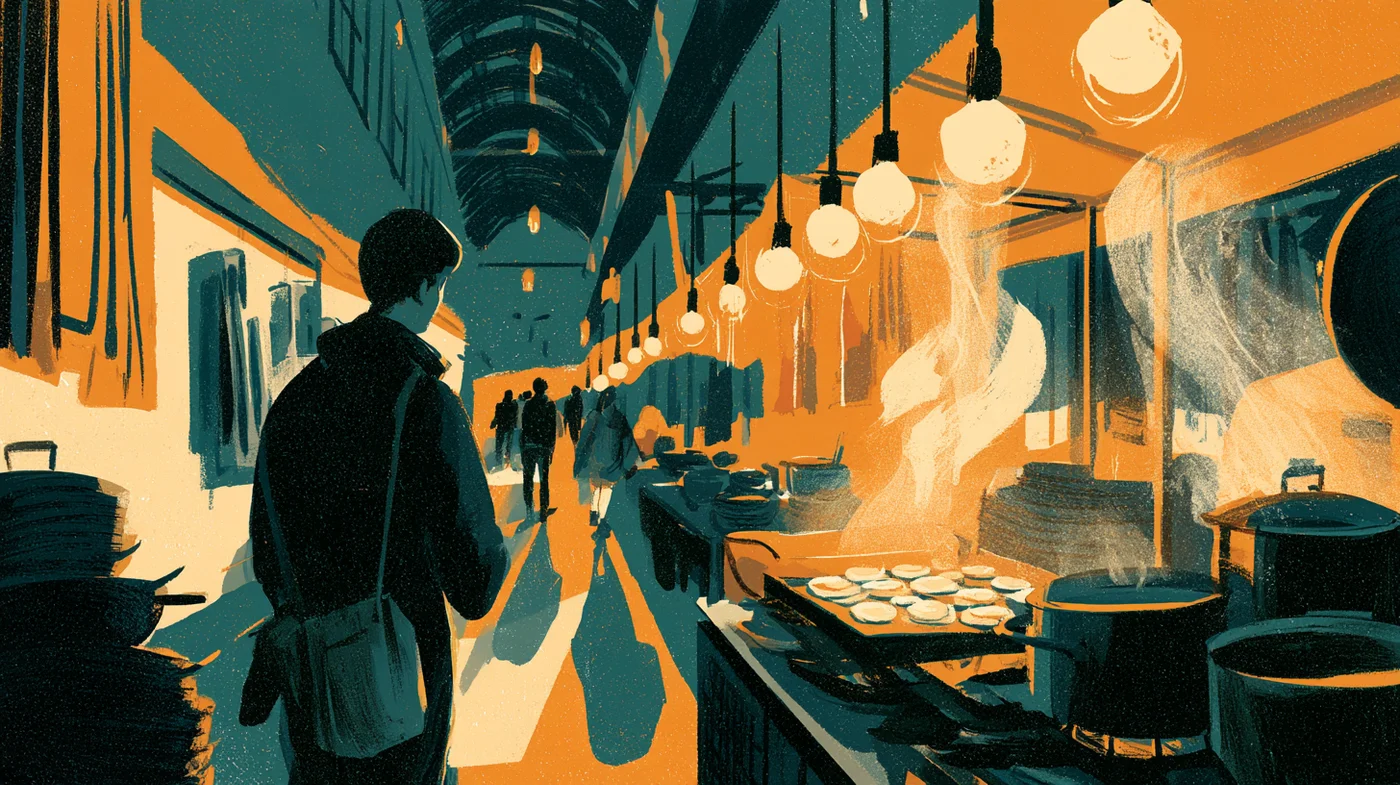
Seoul food: what to eat, and where
Short answer: Seoul is a grill-and-share city. Most meals land in the middle of the table: a barbecue you cook yourself, or a bubbling pot of stew. Around it comes banchan — the little side dishes that arrive free and get refilled without asking. Here's what to order, where to eat it, and the table manners worth knowing.
The Seoul canon — what to order
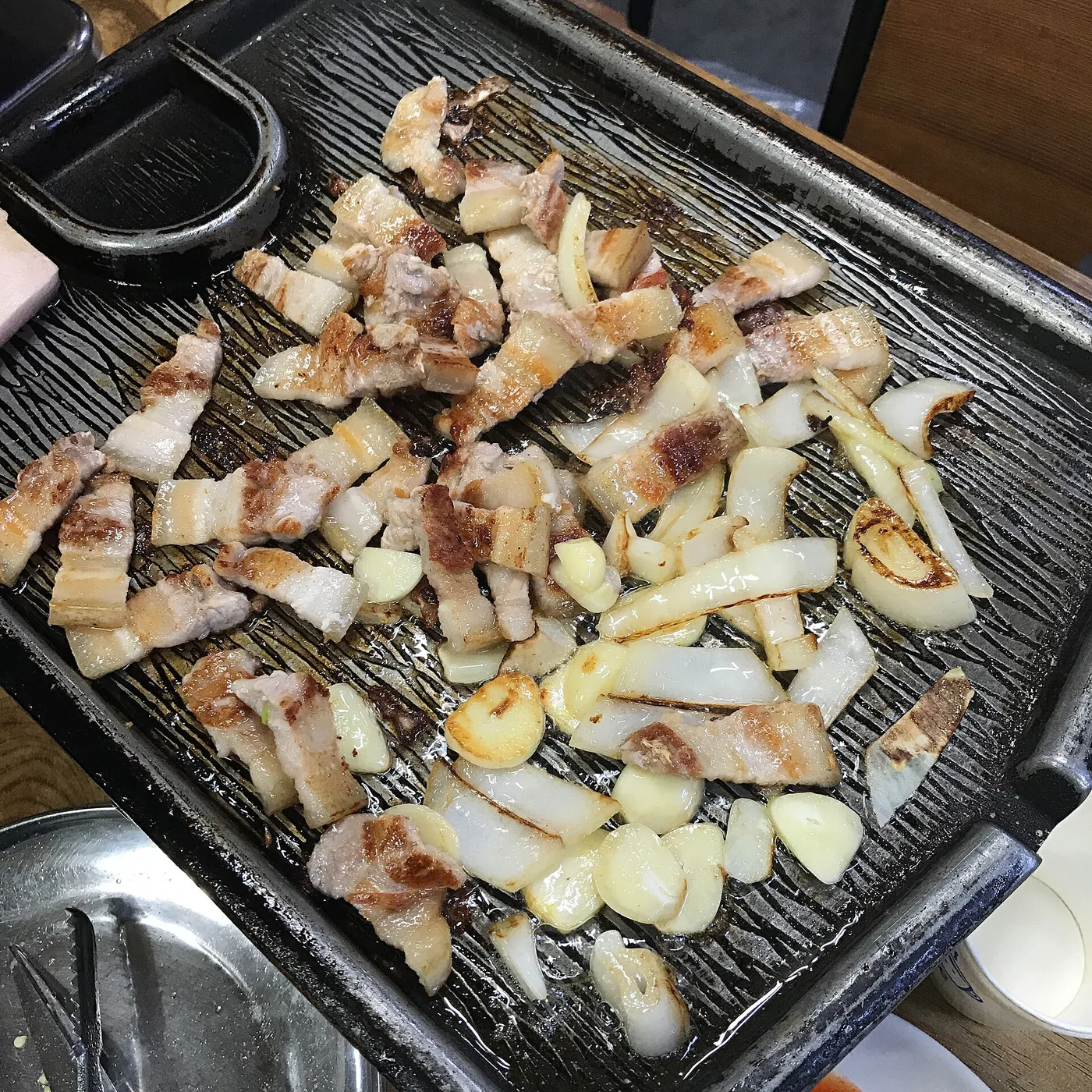
- Korean barbecue (gogi-gui) — pork belly (samgyeopsal) or marinated short rib (galbi) grilled at your table, then wrapped in lettuce with garlic and ssamjang into a ssam parcel. The city's signature meal; is a charcoal-pork classic. Reckon ₩20,000–40,000 (~US$15–30) a head with a soju or beer.
- Samgyetang — a whole young chicken stuffed with rice and ginseng in a milky broth, the summer restorative. The queue-worthy version is near Gyeongbokgung, about ₩20,000 (~US$15).
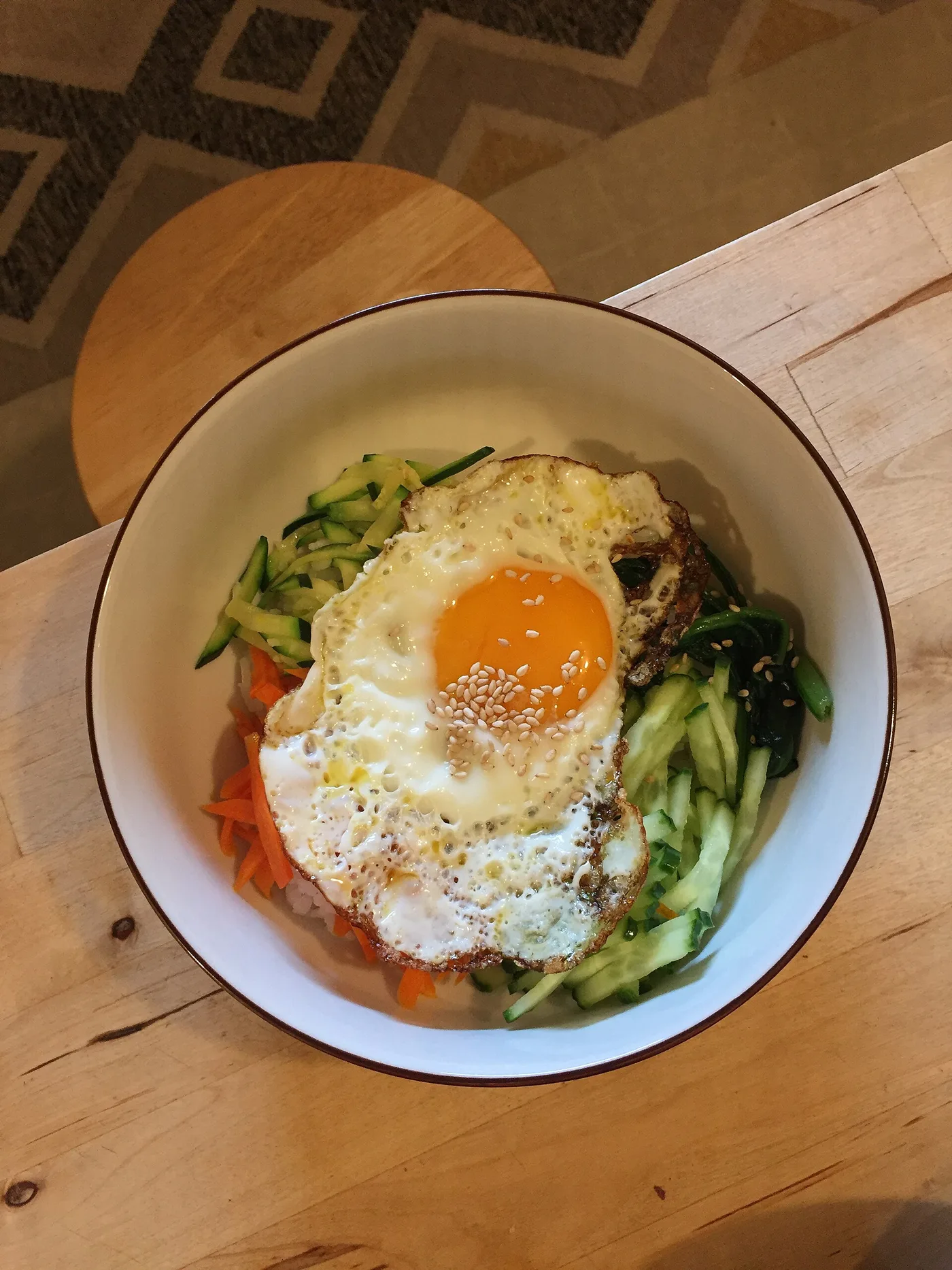
- Bibimbap — rice under a fan of vegetables, egg and gochujang that you mix together yourself; the simplest way into Korean flavours.
- The soups and stews — kimchi jjigae, doenjang jjigae (soybean paste) and sundubu (soft tofu). Cheap, everywhere, and what the city actually eats for lunch.
- Kalguksu & mandu — hand-cut noodle soup and dumplings; does one bowl and little else, and has for decades.
- *Korean fried chicken and beer (chimaek) — double-fried, glazed in soy-garlic or sweet-spicy yangnyeom*; is the benchmark, around ₩20,000 (~US$15) a bird.
- Ganjang gejang — raw crab cured in soy sauce, nicknamed the "rice thief" for how much rice you'll go through; is the one people cross town for.
Seoul also runs a full Michelin scene, from three-star modern Korean at down to temple cooking — the verified Seoul Michelin list is the shortcut to the real ones.
How a Korean table works
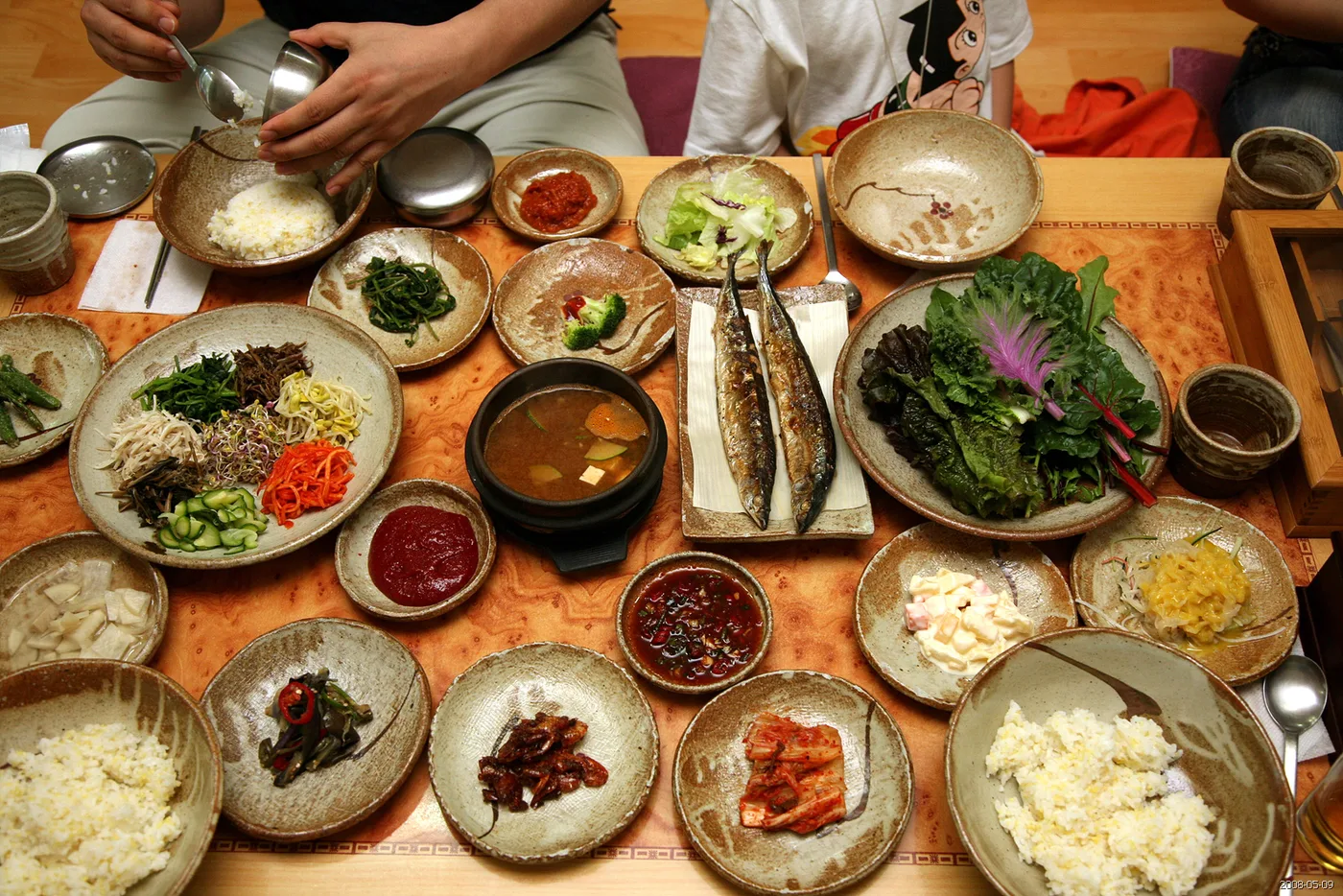
- Banchan is free and refillable. The little dishes — kimchi, seasoned greens, pickles — come with the meal and get topped up on request at no charge. Don't hoard; just ask.
- At barbecue, someone runs the grill. Staff often cut and turn the meat for you; if not, the youngest at the table usually takes it on. Wait for it to be cut before diving in.
- Pouring is a two-hand thing. Pour for others rather than yourself, hold the bottle with two hands for someone older, and turn slightly away when you drink in front of them. No one expects a visitor to know any of this — you won't offend by missing it — but do one and it's quietly appreciated.
Where to eat it
- — the great street-food hall, and a night out in itself. Sit at a stall in the — the one you've seen in the Netflix food shows and K-dramas — for bindaetteok (mung-bean pancake), mayak gimbap (the "addictive" mini rolls) and raw-beef yukhoe. Dishes run about ₩5,000–10,000 (~US$4–7) each, and it's busiest and best in the evening.
- — buy a tray and a purse of brass tokens, then fill a dosirak lunchbox from the stalls with them. The most fun ₩5,000 (~US$4) you'll spend, just west of Gyeongbokgung.
- Euljiro's Nogari Alley — after-work Seoul: fold-out tables in the street, grilled nogari (dried pollack) and cold draft beer, with anchoring the lane.
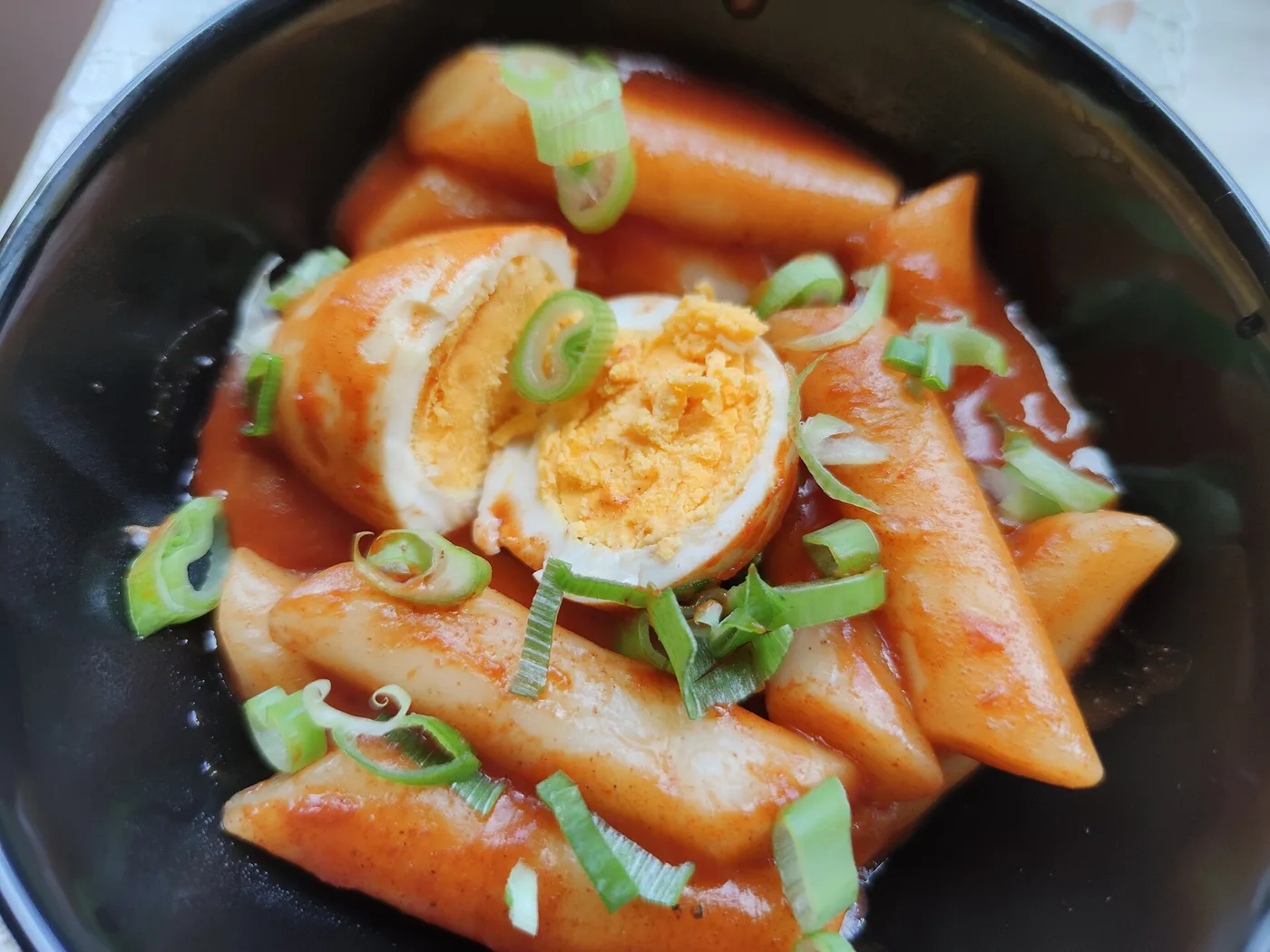
- — a whole lane of tteokbokki joints doing the bubbling cook-at-your-table version, around ₩4,000–5,000 (~US$3–4) a portion.
- For a quiet, meat-free contrast, book for Buddhist temple cuisine, opposite .
The mistake to avoid
Making the whole trip one barbecue blowout. Grill houses portion for a table, and the banchan never stops. But the stews, markets and chimaek are where half the city actually eats — so one meat feast misses the range. Graze instead: a market night here, a stew lunch there, chicken-and-beer late.
Sorting a week of Seoul meals — the barbecue night, the market graze, the stew lunch, all near where you already are — is fiddly by hand. We do about 80% of that research for you, in roughly a minute. Tell us your dates and we'll put the right Seoul food at the right time in your day — near where you already are, at meal times, with nothing to reserve. A solid first cut you can run with.
A full day-by-day plan in about a minute — free, no account.
✨ Plan my trip