

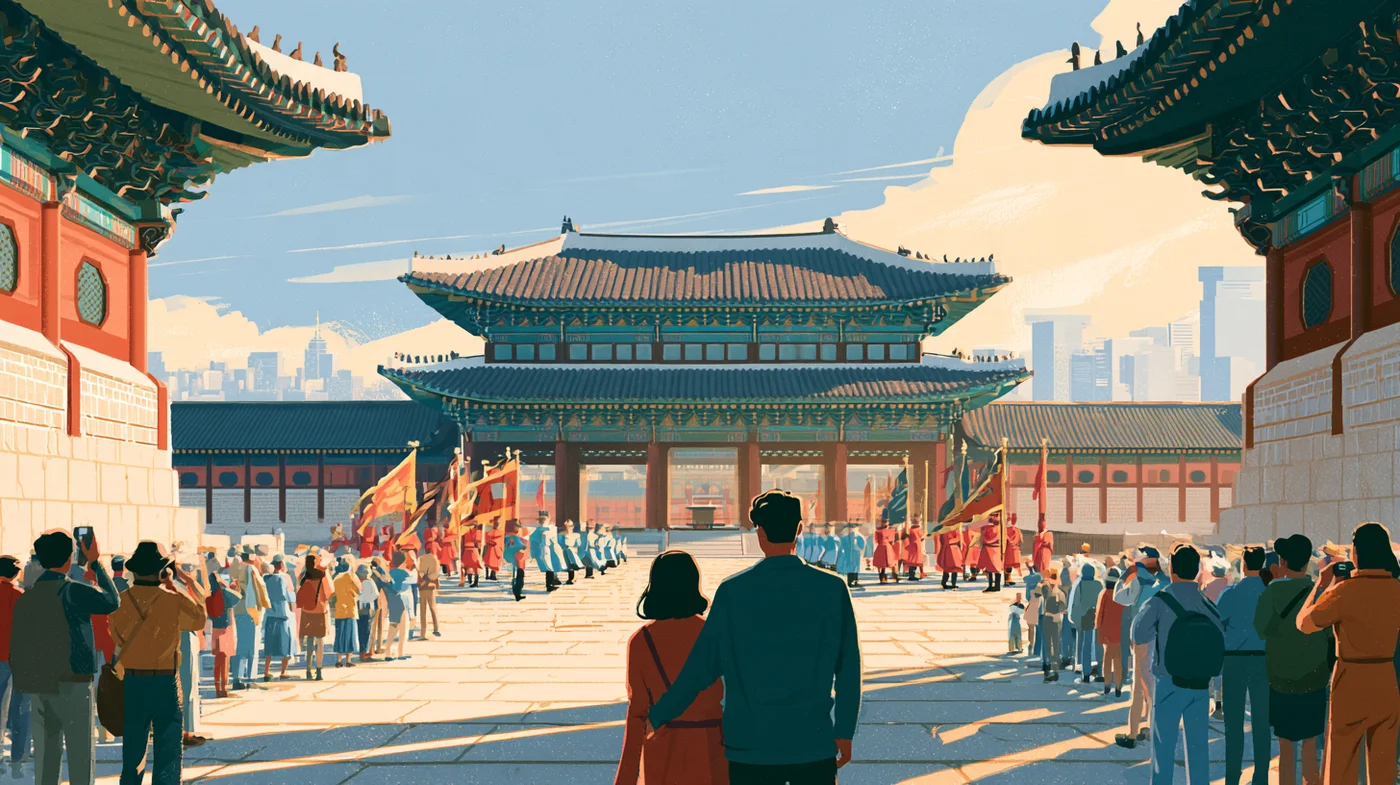
Seoul in 4 days: a first-timer's itinerary
Short answer: four days is right for a first Seoul trip — palaces, markets, one mountain view and one proper night out, without sprinting. Three works if you drop a day trip; five adds depth, not new ground.
The thing that actually breaks first-timer plans here isn't distance — it's closed days. Gyeongbokgung, the big palace, closes on Tuesdays. Changdeokgung, the beautiful one, closes on Mondays. Plan those two days backwards from that and the rest falls into place.
The four-day shape
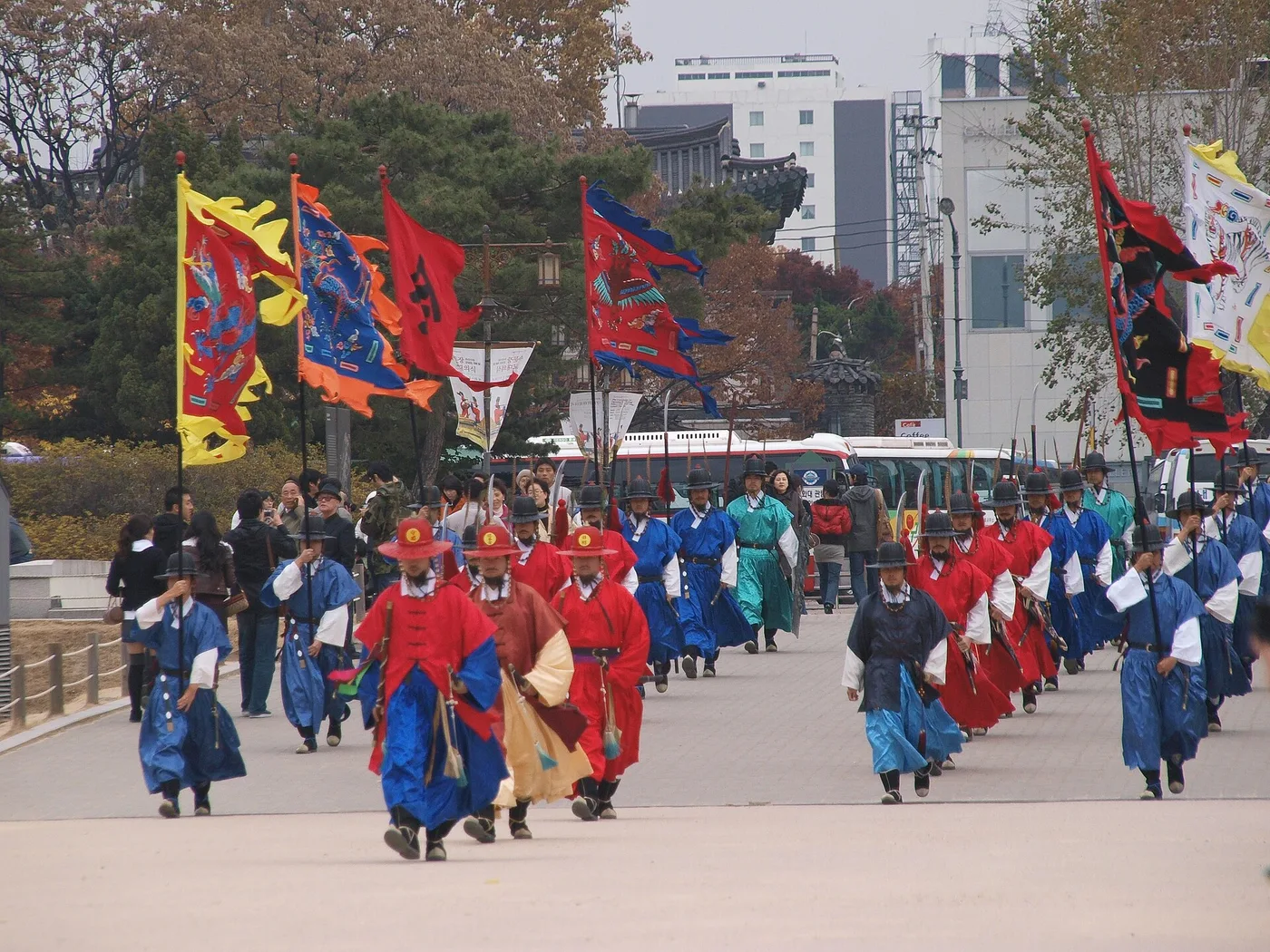
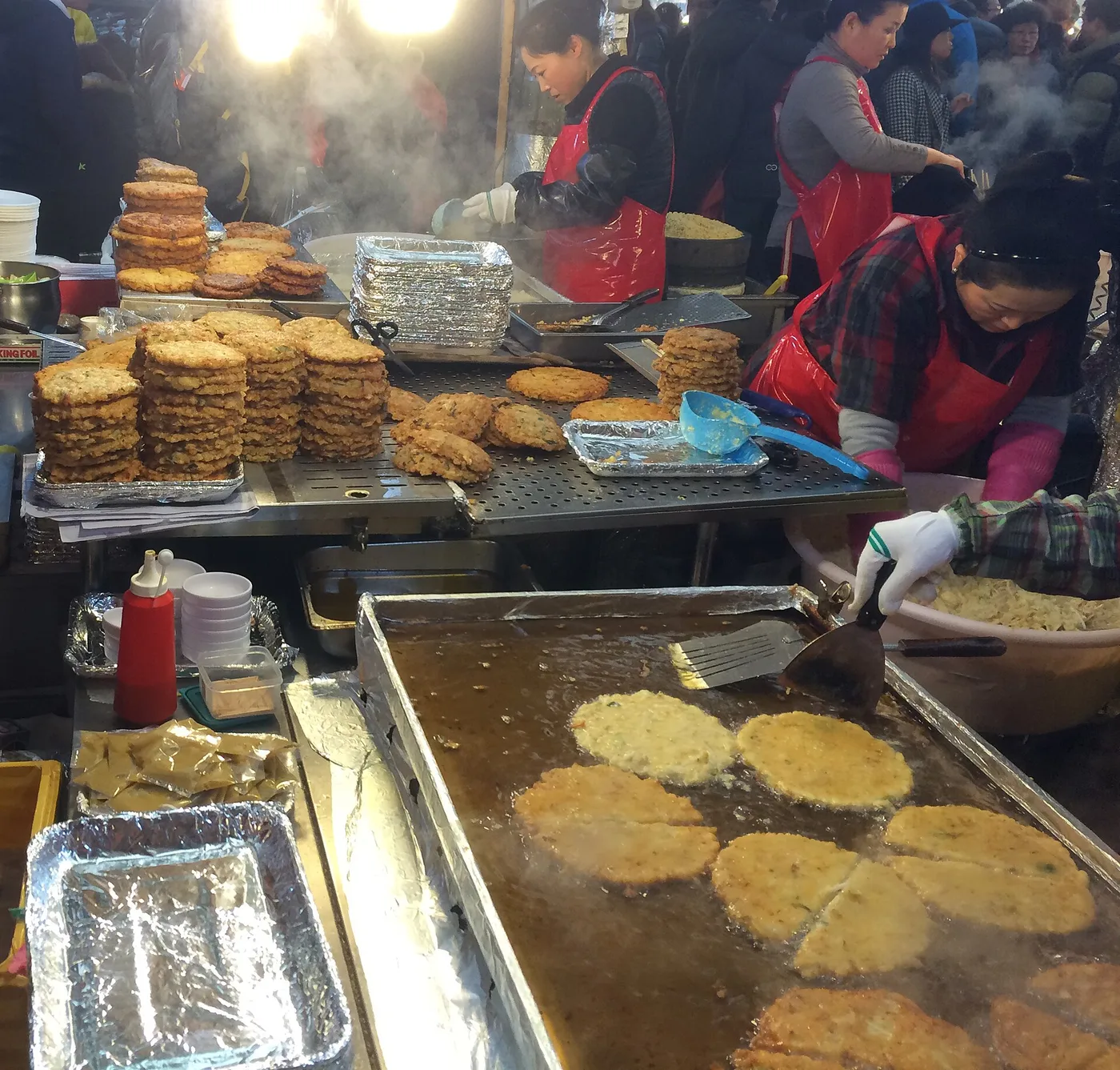
- Day 1 — the royal north: for the changing of the guard (the ceremony runs daily at 10am and 2pm — but the palace is closed Tuesdays), then 's hanok lanes next door, for tea and souvenirs. Dinner at , where the food alley is the dinner: bindaetteok (mung-bean pancakes) with a bowl of kalguksu (knife-cut noodles), mayak gimbap (moreish mini seaweed rolls), and the yukhoe (seasoned raw beef) the market is most famous for. No restaurant needed.
- Day 2 — old gates, new city: and its Secret Garden in the morning, after — the spaceship building is a ten-minute ride from the palace and a different century entirely. Night market stalls if it's a weekend.
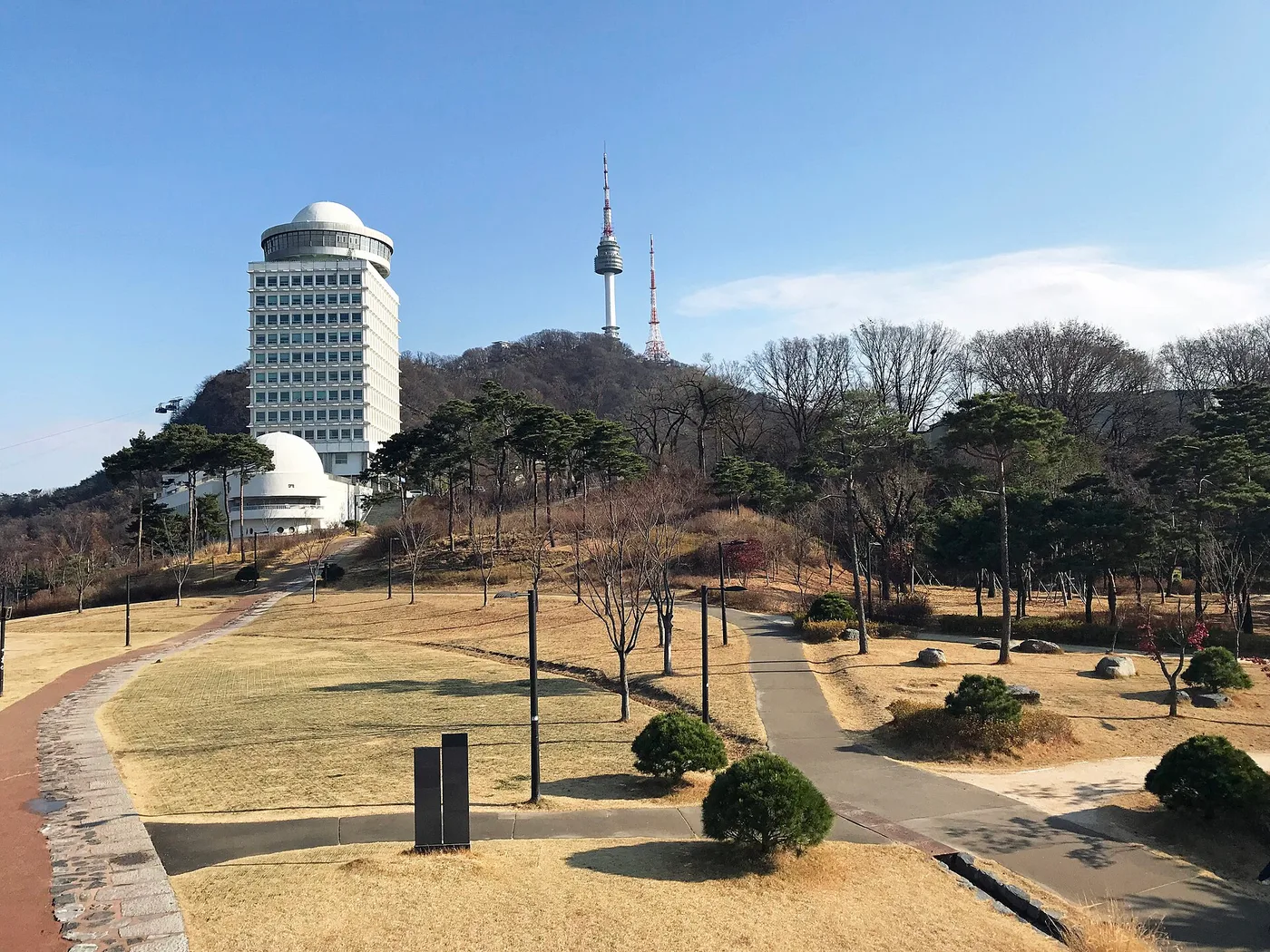
- Day 3 — the view and the night: Namsan — the wooded hill right in the middle of the city — in the late afternoon: walk or take the cable car up to at its summit for sunset over the whole city, then down into 's street-food crush, or across to if you'd rather end with music and neon than shopping.
- Day 4 — pick your Seoul: Gangnam and the if you want the glossy version; and a jjimjilbang (a Korean bathhouse-sauna, open late) if you want the local one. This is the day that tells you whether you'll be back.
Like the look of this? Start a Seoul plan and we'll build these four days out on the real map — grouped by area, timed around the closed days, and yours to tweak in about a minute.
The catch nobody mentions
Seoul's sights cluster tightly — the whole Day 1 route is walkable — but the clusters sit far apart. Namsan to Gangnam is a proper ride. Group each day around one area and the trip feels easy; zigzag and you'll spend your afternoons underground.
Getting around
Buy a T-money card at any convenience store — about ₩3,000 (~US$2), and one tap covers the subway, buses and most taxis. Since 2026 the recharge machines in over 220 stations also take foreign credit cards, so you don't need to hoard cash for top-ups. (The full getting-around-Seoul guide covers the Metro, the AREX airport train, Kakao T taxis and the KTX out to the rest of Korea.)
When to go, and one warning
Spring and autumn are the postcard seasons. Summer is hot and properly wet; winter is cold enough that the palace courtyards empty out — beautiful, but pack for it.
The warning: check the closed days against your actual dates. A Monday-Tuesday city break can lock you out of both great palaces. If a closed day falls on a public holiday, the palace opens and closes the next day instead — one more thing to check, or one more thing to skip checking:
Working a Seoul itinerary out by hand — the closed-day traps, the clusters that sit far apart, the right order — is hours of it. We do about 80% of that research and hand it back in roughly a minute. Tell us your dates and the plan routes around the closed days by itself — palaces on the days they're open, markets in the evenings they run, and the whole thing grouped so you're not living in the subway. A solid first cut; drag anything you'd rather do differently.
A full day-by-day plan in about a minute — free, no account.
✨ Plan my trip