

Osaka street food: what to eat, and where
Short answer: Osaka calls itself tenka no daidokoro — "the nation's kitchen" — and the local word for how you're meant to treat it is kuidaore, roughly "eat yourself broke." This is a city you plan around meals, not sights. Here's what to order and where to find it.
The Osaka canon — what to order
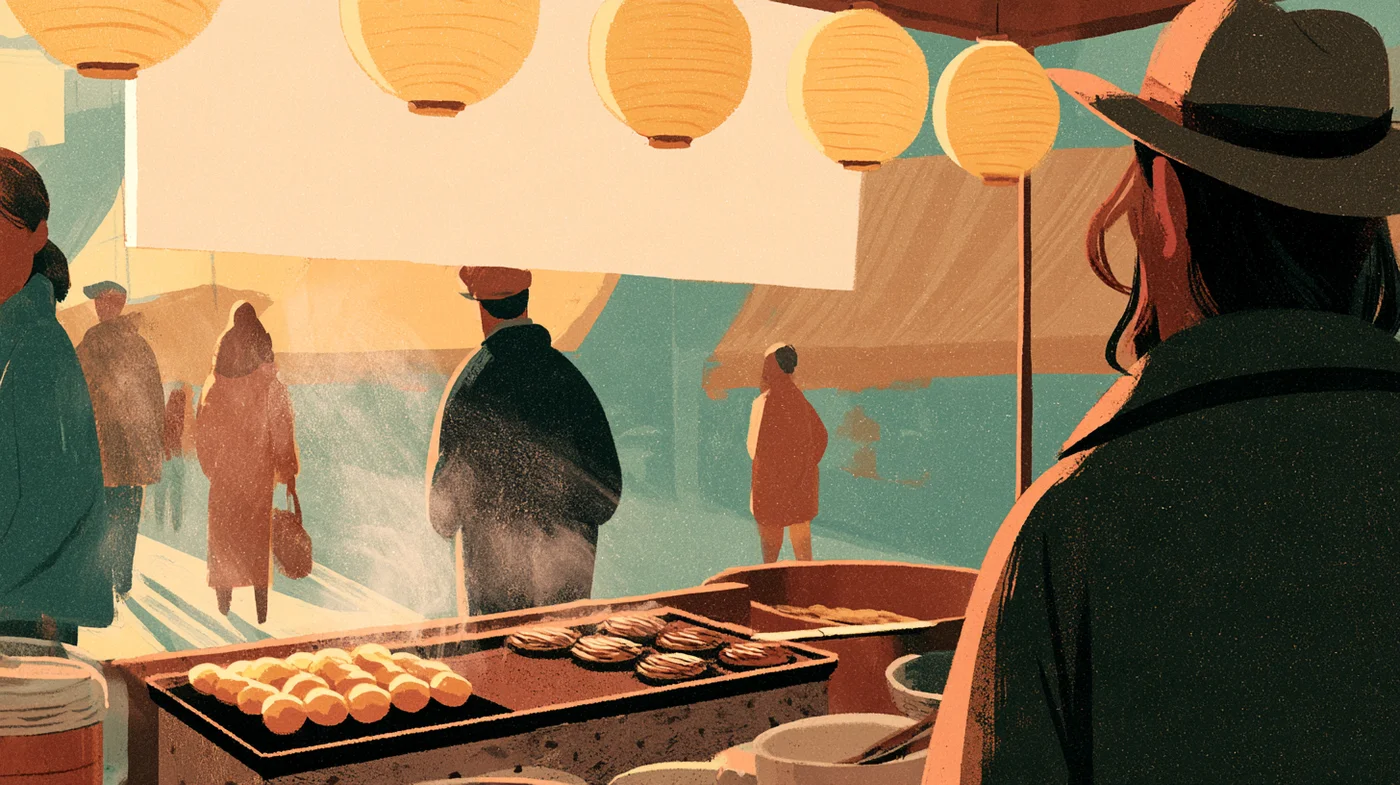
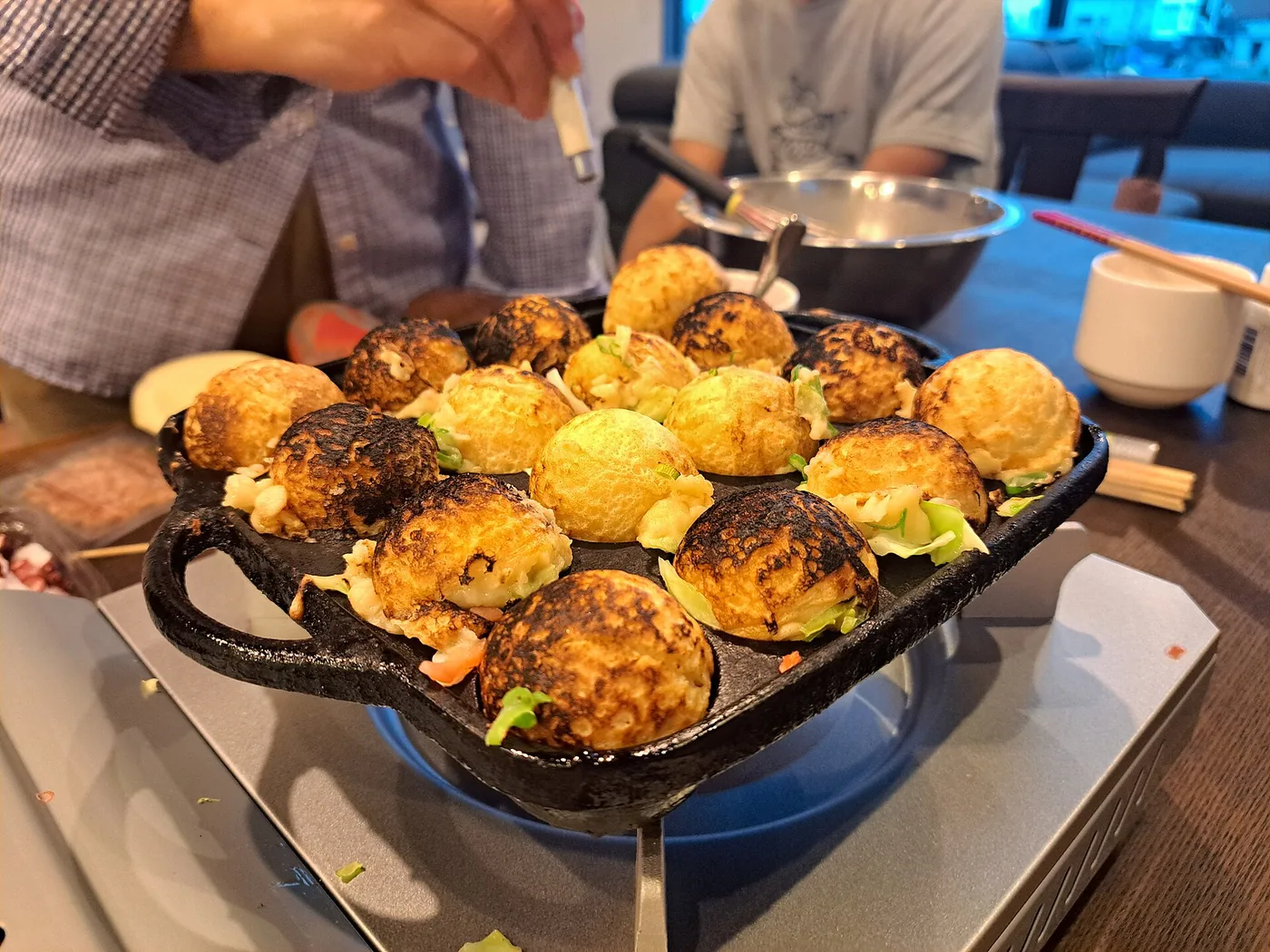
- Takoyaki — molten octopus dumplings off a hot griddle, Osaka's own invention. Eat them where they're made (they don't travel), standing at the stall — and hand your rubbish back at the shop, because public bins are genuinely scarce across Japan's cities.
- Okonomiyaki — a savoury cabbage pancake you often cook at your own table, with pork, seafood or cheese. The Osaka style mixes everything into the batter (Hiroshima layers it — don't confuse the two). Look for the Osaka-born variants too: modanyaki (the same pancake with a nest of yakisoba noodles folded in) and negiyaki (thinner and lighter, piled with green onion).
- Kushikatsu — kushi (skewer) + katsu (fried cutlet): bite-sized meat, veg and cheese on sticks, coated in a light flour batter and fine panko crumbs and deep-fried crisp — crunchier and lighter than tempura's eggy batter — then dunked in a communal sauce. See the one rule below.
- Kitsune udon — thick noodles in a light broth under a sheet of sweet fried tofu; another Osaka original, and the comfort food when you've over-eaten.
- butaman — fat steamed pork buns from a Kansai institution you'll smell before you see. They're made fresh every day and, by the company's own choice, sold only around Kansai — they won't ship to Tokyo, so this is your window. The gyoza (thin, chewy skins) are worth adding, and while there's usually a queue, it moves fast.
Osaka isn't only griddle food, either — it quietly holds a deep bench of Michelin sushi and kappō counters; the verified Osaka Michelin list is the shortcut to the real ones.
The one rule you must not break
Kushikatsu is dipped in a shared tub of sauce that everyone at the counter uses. So there is exactly one commandment, printed on the wall of every shop: no double-dipping. One dip per skewer, before your first bite — never dip a skewer you've already bitten. Want more sauce? That's what the free shredded cabbage is for: scoop it and pour. Break this and you'll get a look you won't forget.
Where to eat it
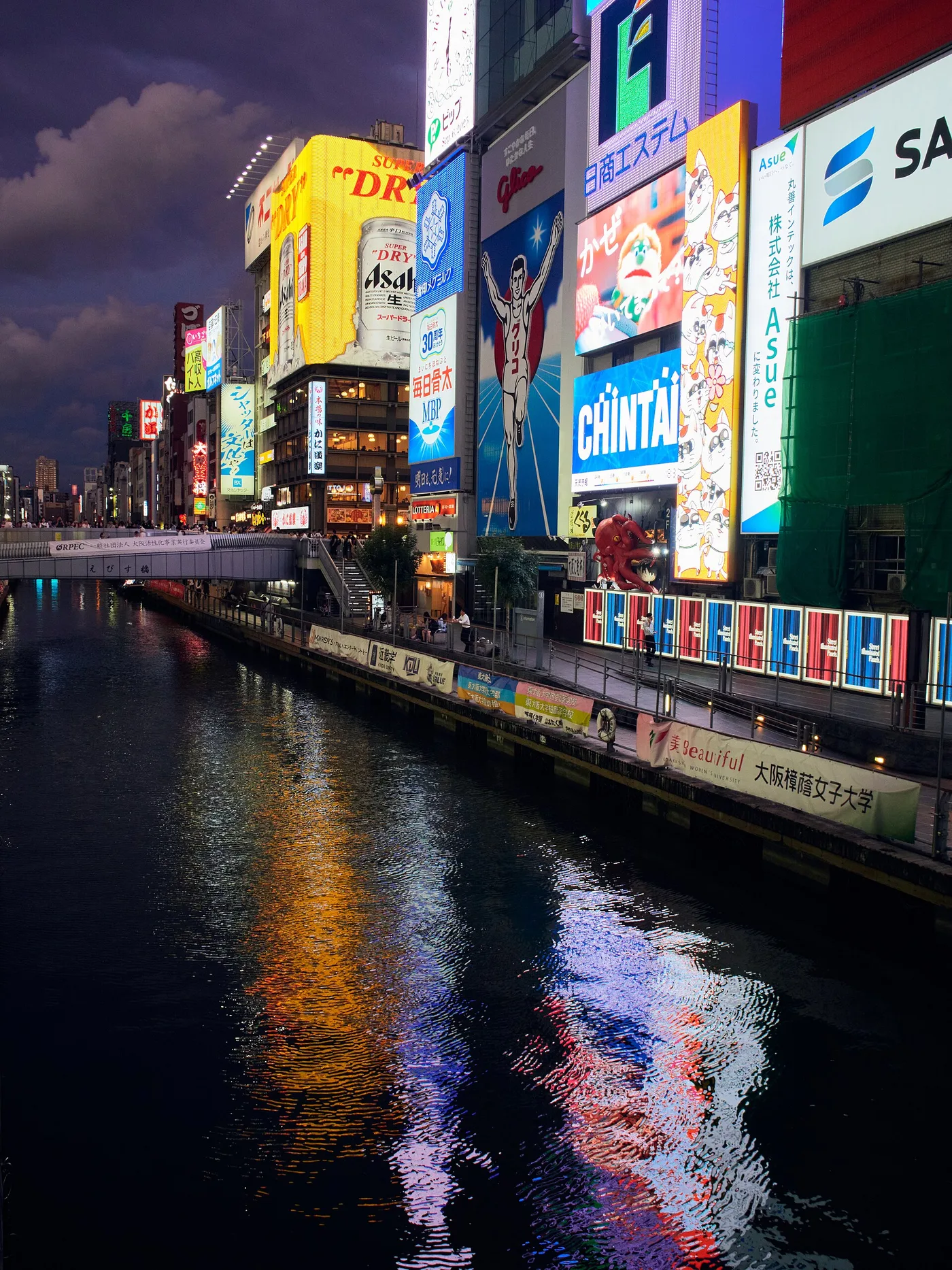
- — the neon canal, and the obvious start. Takoyaki at , okonomiyaki at or , and the giant moving crab over . Touristy, yes — but the classics still deliver, and it's a spectacle worth having once.
- — a covered market that's Osaka's pantry: grilled scallops, uni, wagyu skewers, and for a famous market breakfast. Best in the morning, before it's picked over.
- & — the old south side, and the home of kushikatsu; started here.
- Ura-Namba & — a street or two back from the crowds, where the locals' tiny izakaya are.
The mistake to avoid
Eating on Dotonbori's single busiest corner because it's the one you're standing on. The best versions of all of this are usually a street back, or a market over, from the crush. Go a little off the main drag and hungry.
We do about 80% of the trip research — the hours of working out what's good, where, and when — and hand it back in roughly a minute. Tell us your dates and we'll put the right Osaka food at the right time in your day: near where you already are, at meal times, no reservations to wrangle. A solid first cut you can run with.
A full day-by-day plan in about a minute — free, no account.
✨ Plan my trip